
أورام العظام
Case Definition
What Are Bone Tumors?
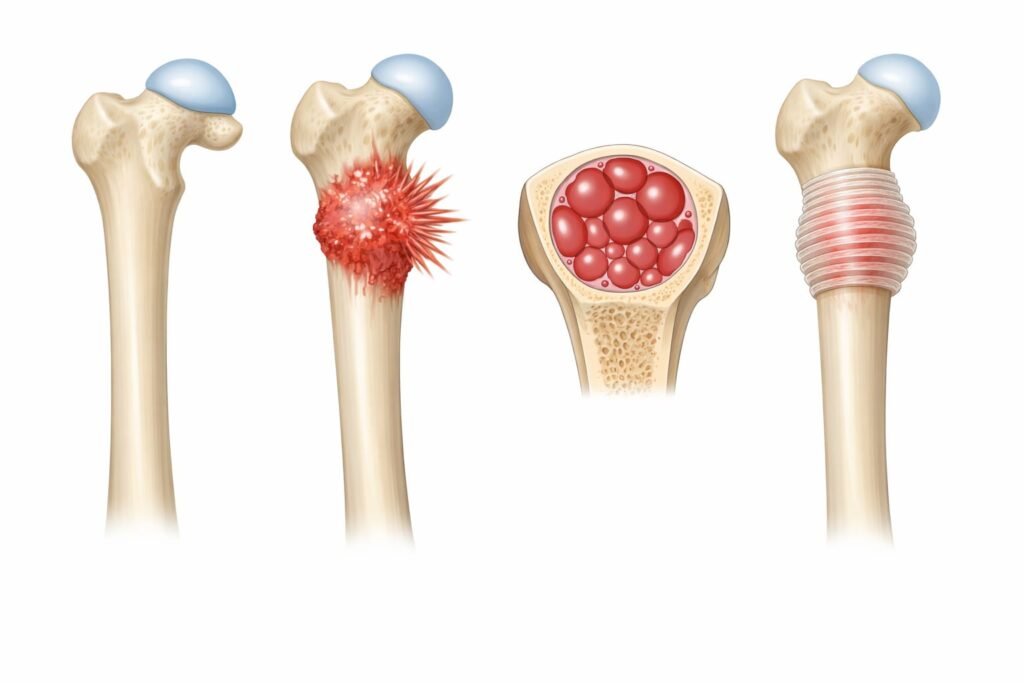
Bone tumors are abnormal growths of bone cells, which can be either benign or malignant. Benign tumors usually do not spread and remain localized, while malignant tumors can spread to other parts of the body and are more serious.
Symptoms:
- Gradually increasing bone pain that may persist even at rest
- Swelling or a lump in the affected bone area
- Weakness or easy fracture of the bone in some cases
- Difficulty moving if the tumor is near a joint
- General symptoms such as weight loss or fatigue in malignant tumors
Causes:
- Genetic mutations leading to abnormal growth of bone cells
- Rare hereditary diseases that increase the risk of bone tumors
- Exposure to radiation or certain chemicals in rare cases
Diagnosis:
- Clinical examination and review of the patient’s medical history
- X-rays to determine the size and location of the tumor
- MRI or CT scans to evaluate depth and surrounding tissues
- Bone biopsy to determine tumor type (benign or malignant)
- Blood tests to assess general health and rule out complications
Treatment:
- Regular monitoring for small, asymptomatic benign tumors
- Surgery to remove the tumor and repair the affected bone or joint
- Chemotherapy or radiotherapy for malignant tumors depending on type and stage
- Physical therapy after surgery to improve mobility and strengthen surrounding muscles
Doctor’s Advice:
Early detection of persistent bone pain or swelling helps in timely diagnosis and appropriate treatment, reducing complications, especially in malignant tumors.
Frequently Asked Questions About Bone Tumors
We fully understand the importance of having all the necessary information to make informed decisions about your health. So, we have compiled the most frequently asked questions about orthopedic surgeries and provided clear and reliable answers. We hope this section helps you gain a better understanding of the condition.
No, there are benign tumors that usually do not pose a significant risk, while malignant tumors require careful monitoring and prompt treatment.
Through X-rays, MRI scans, and a biopsy to determine whether the tumor is benign or malignant.
The treatment is targeted to the tumor and aims to preserve as much healthy bone as possible, but some side effects may occur and are closely monitored during therapy.
Register Your Interest! Fill out the form easily.
Contact Us Now
We are always here to assist you with everything related to the health of your bones and joints. Whether you want to book an appointment, have a question about a specific medical condition, or need clarification about our services, our team is ready to answer all your inquiries. Don’t hesitate to contact us by phone or email, or visit us at the clinic during working hours. Your health is our priority, and we look forward to providing you with the care you deserve.