
Bone Diseases
Bones are the structural framework of the human body, providing support, movement, and protection for vital organs. With aging, or as a result of genetic factors, injuries, or chronic diseases, bones and joints may develop various conditions that can significantly affect quality of life.
On this page, we present the most common bone diseases and their main classifications, along with a brief overview of each category, to serve as a comprehensive and easy-to-understand guide for patients.
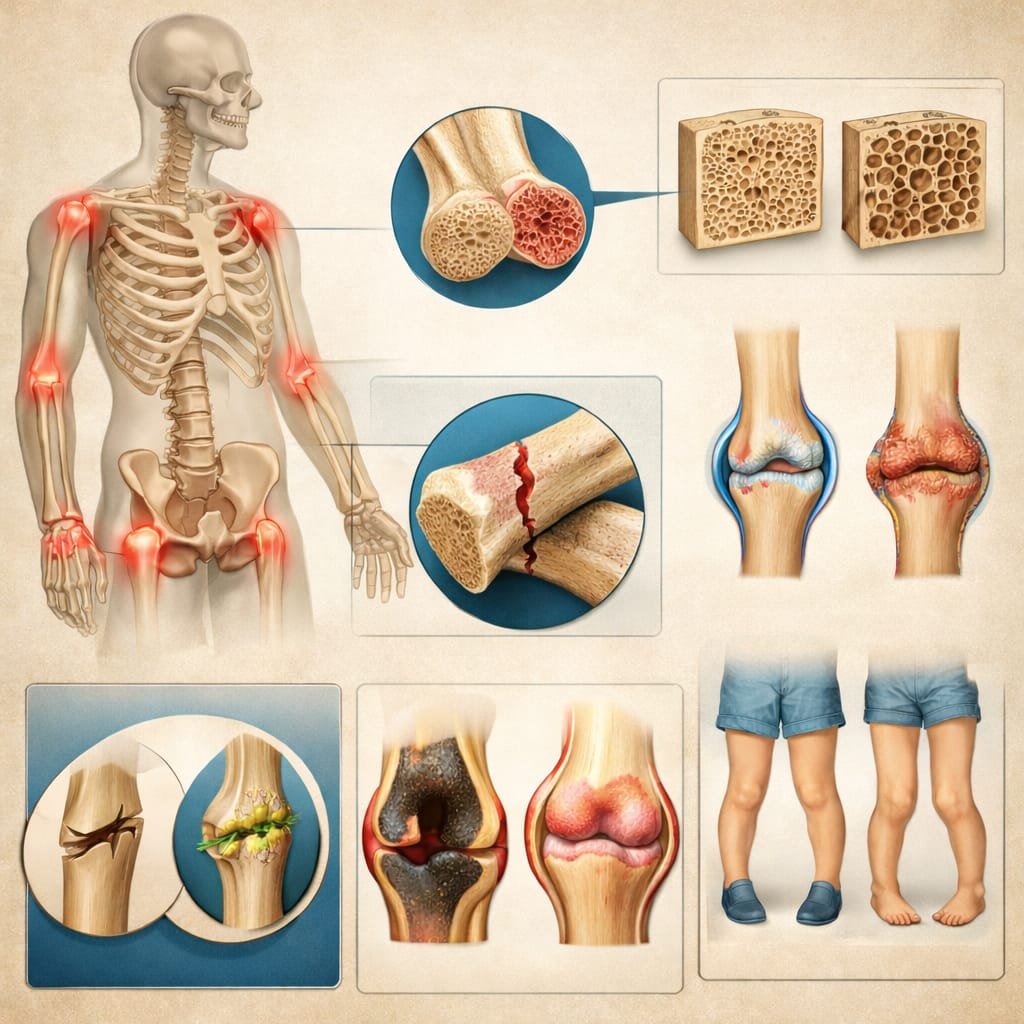
Orthopedic Diseases and Surgeries with Dr. Mohamed Sayed Hassanein: Comprehensive Care with Global Expertise
First: Joint Disorders
Joint disorders are among the most common orthopedic conditions. They cause pain and difficulty in movement and may directly affect a patient’s daily activities.
Joint disorders include the following:
- Knee Osteoarthritis:
A condition caused by the wear and tear of articular cartilage, leading to pain, stiffness, and difficulty walking, and it worsens with age. - Hip Osteoarthritis:
Affects the hip joint and causes pain during movement or prolonged sitting, and pain may radiate to the thigh or knee. - Hip Joint Instability:
Weakness in joint stability that may result from injuries, previous surgeries, or chronic conditions. - Avascular Necrosis of the Femoral Head:
A serious condition caused by reduced blood supply to the femoral head, leading to bone damage. - Femoroacetabular Impingement (FAI):
Occurs due to abnormal contact between the femur and the hip socket, which may cause chronic hip pain. - Rheumatoid Arthritis:
A chronic autoimmune disease that causes joint inflammation, swelling, and pain, and may lead to deformities if left untreated.
Second: Bone Deformities and Limb Alignment Disorders
Bone deformities may be congenital or acquired and affect both the external appearance and function of the bones.
- Genu Valgum (Knock Knees):
Occurs when the knees angle inward and may be normal at certain ages or result from pathological causes. - Genu Varum (Bow Legs):
Occurs when the knees are apart while the feet are together and may be associated with rickets or genetic factors.
Third: Osteoporosis
Osteoporosis is a condition characterized by reduced bone density, making bones more prone to fractures, especially in the elderly and postmenopausal women. It may also occur at a younger age due to medical conditions or nutritional deficiencies.
Fourth: Genetic and Developmental Bone Disorders
These conditions affect bone growth and development and often appear during childhood.
- Dwarfism:
A growth disorder leading to short stature due to hormonal or genetic causes. - Congenital Bone Deformities:
Deformities present at birth, such as limb or spinal deformities. - Growth Plate and Skeletal Growth Disorders:
Conditions that affect the length or shape of bones during different growth stages.
Fifth: Bone Tumors
Bone tumors may be benign or malignant, and their impact and severity vary depending on the type and location.
- Benign Bone Tumors:
Usually do not spread, but they may cause pain or deformity if they increase in size. - Malignant Bone Tumors:
Cancerous tumors that require early diagnosis and specialized treatment to achieve the best outcomes.
Bone diseases of all types require accurate diagnosis and early intervention to preserve mobility and quality of life. Dr. Mohamed Sayed provides specialized care in the diagnosis and treatment of bone and joint conditions using the latest medical approaches, with the option to book a consultation to receive a personalized treatment plan for each case.
Experience & Expertise
Dr. Hassanein has many years of experience in joint replacement surgery and has performed numerous successful procedures that have restored hope to his patients.
Latest Techniques
We utilize the latest surgical tools and techniques to ensure precision during the procedure and to minimize recovery time.
Comprehensive Care
Your journey with us begins with an accurate diagnosis, followed by an appropriate treatment plan, and continues with a rehabilitation program designed to ensure the best possible outcomes.
Specialized Medical Team
We have a dedicated team of professionals working together to ensure your comfort and safety at every step.
FAQ About Bone Diseases
We fully understand the importance of having all the necessary information to make informed decisions about your health. Therefore, we have compiled the most frequently asked questions about orthopedic conditions and provided clear and reliable answers. We hope this section helps you gain a better understanding of the conditions and treatment options available.
They include joint conditions such as knee and hip osteoarthritis, rheumatoid arthritis, bone deformities and limb alignment disorders, osteoporosis, genetic and developmental bone diseases, as well as benign and malignant bone tumors.
Aging, injuries, genetic factors, nutritional deficiencies, autoimmune inflammation, or certain chronic diseases.
No. Many conditions improve with physical therapy, muscle-strengthening exercises, pain-relieving or joint-supporting medications. Surgery is usually reserved for advanced cases or those that do not respond to conservative treatment.
Maintaining a healthy weight, exercising regularly, following a balanced diet rich in calcium and vitamin D, and early diagnosis of any bone or joint problems.
Register Your Interest! Fill out the form easily.
Contact Us Now
We are always here to assist you with everything related to the health of your bones and joints. Whether you want to book an appointment, have a question about a specific medical condition, or need clarification about our services, our team is ready to answer all your inquiries. Don’t hesitate to contact us by phone or email, or visit us at the clinic during working hours. Your health is our priority, and we look forward to providing you with the care you deserve.